The forest does the hard part.
flo. Coffee Roastery roasts specialty arabica that grows under agroforestry canopy in Indonesia. Shade slows the cherry. The cherry builds the flavour. The forest stays standing.
What the label tells you.
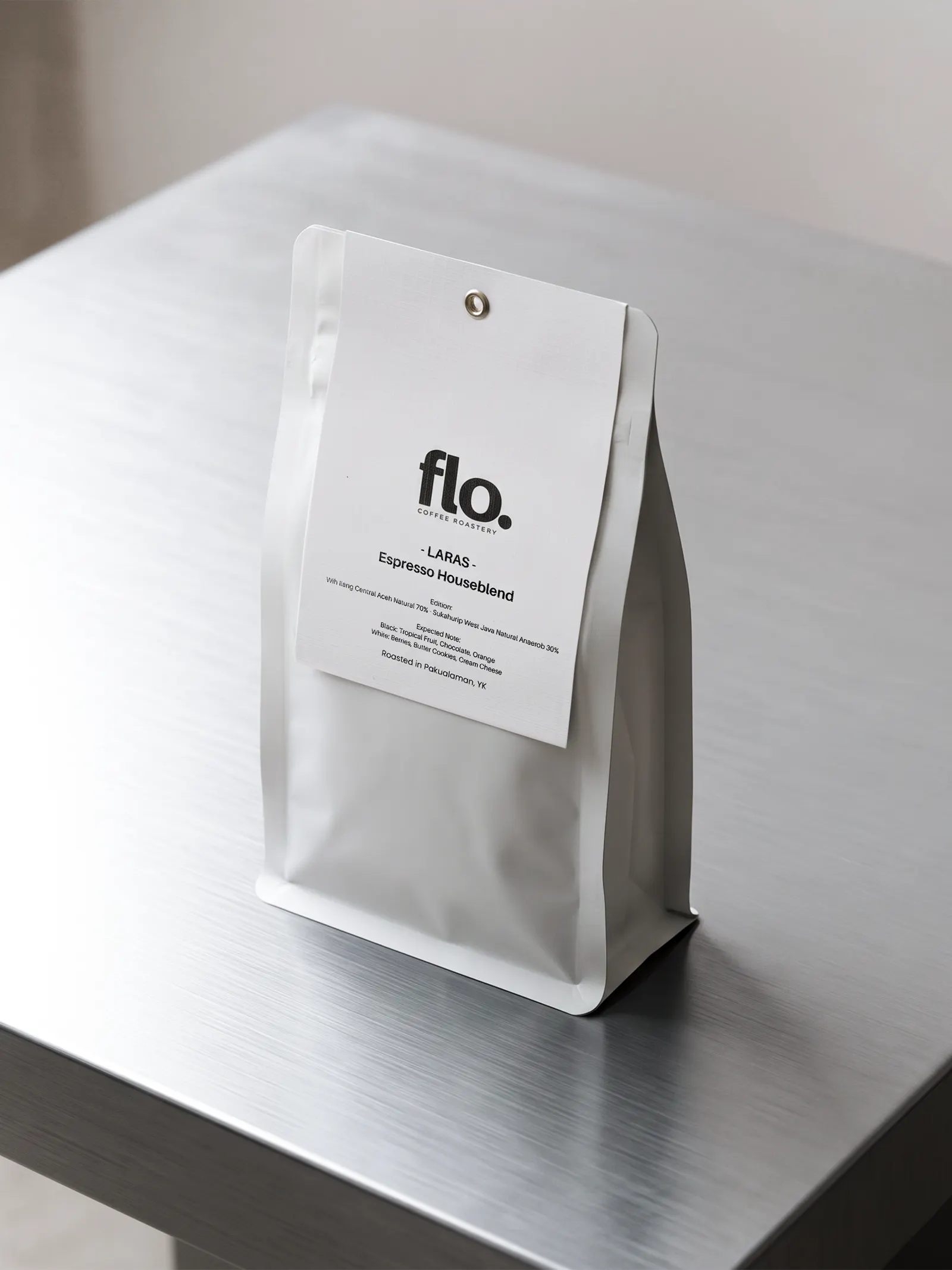
There is no marketing on the back of our bags. Origin, source, process, altitude, cup. Every lot is roasted in small batches at our roastery in the historic district of Pakualaman, Yogyakarta. If we can't print it on the label, we don't sell it.
We buy specialty grade green beans only, from farmers and processors who grow coffee inside biodiverse forest ecosystems. That is a sourcing decision before it is anything else.
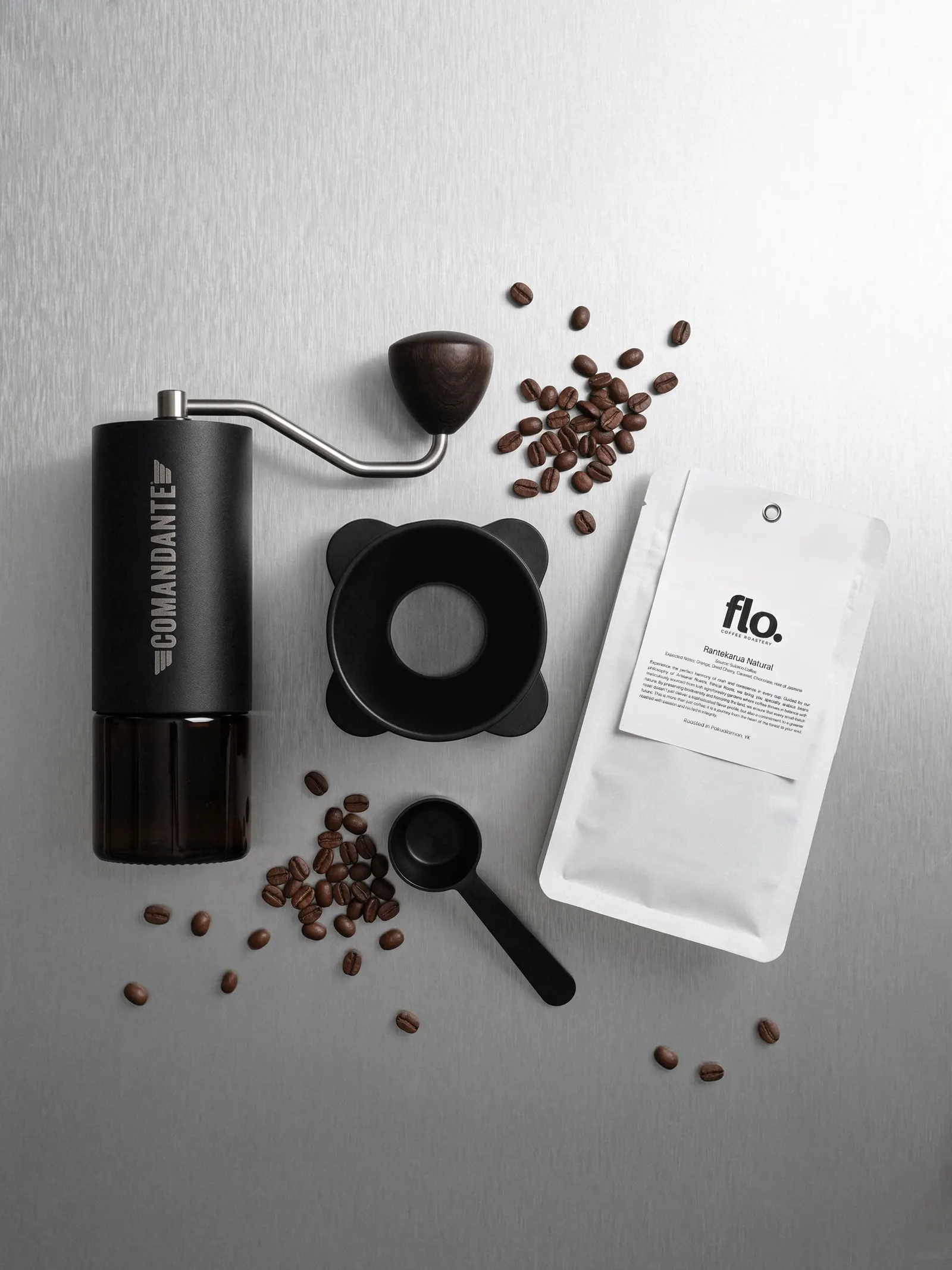
- Lot
- Rantekarua Natural
- Source
- Sulotco Coffee, Sulawesi, Indonesia
- Process
- Natural
- Varietal
- Lini S, USDA, Catuai
- Altitude
- 1,500–1,700 MASL
- In the cup
- Orange, dried cherry, caramel chocolate, a hint of jasmine
- Roast
- Light–medium, filter profile
One blend, two cups.
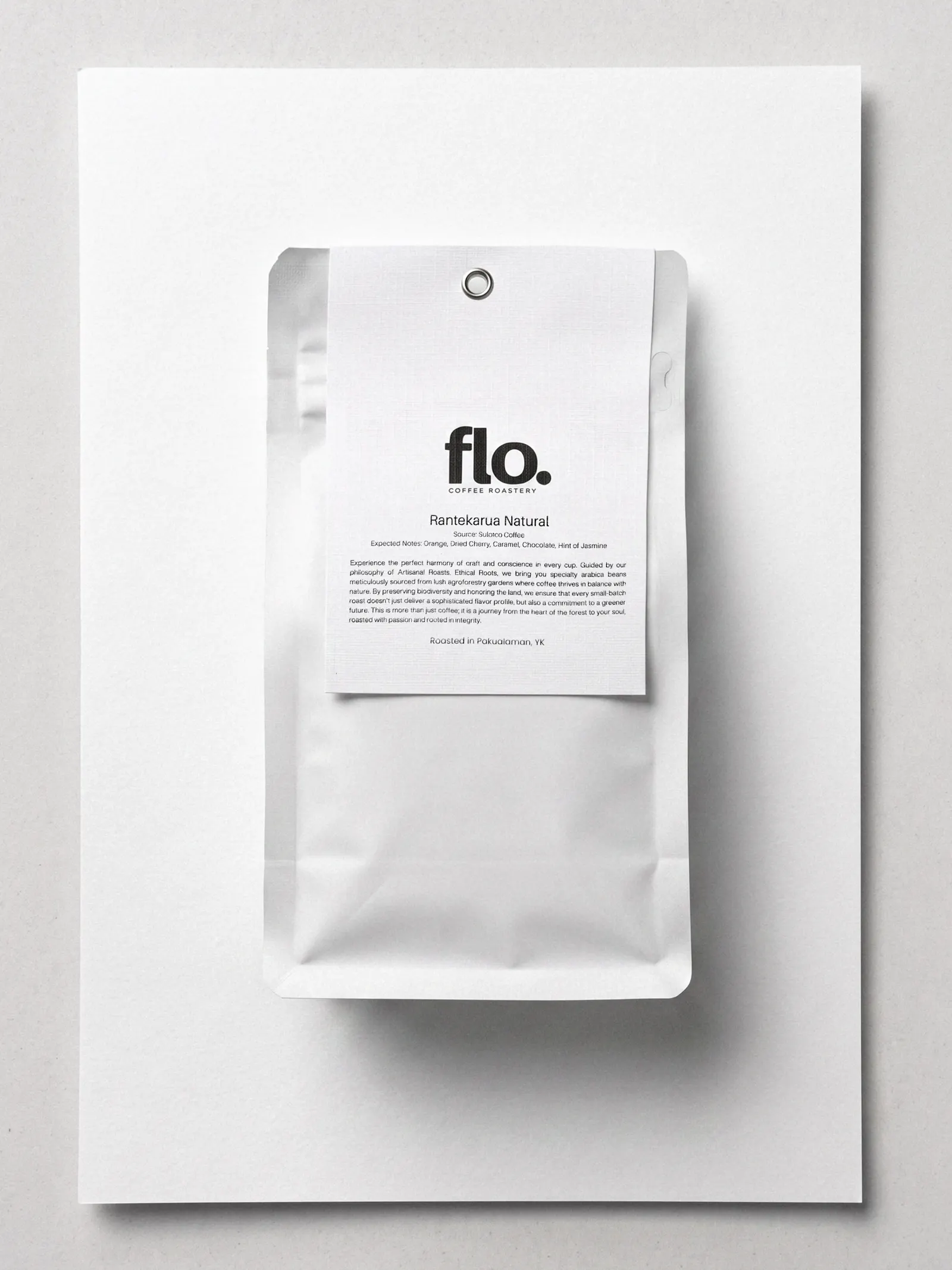
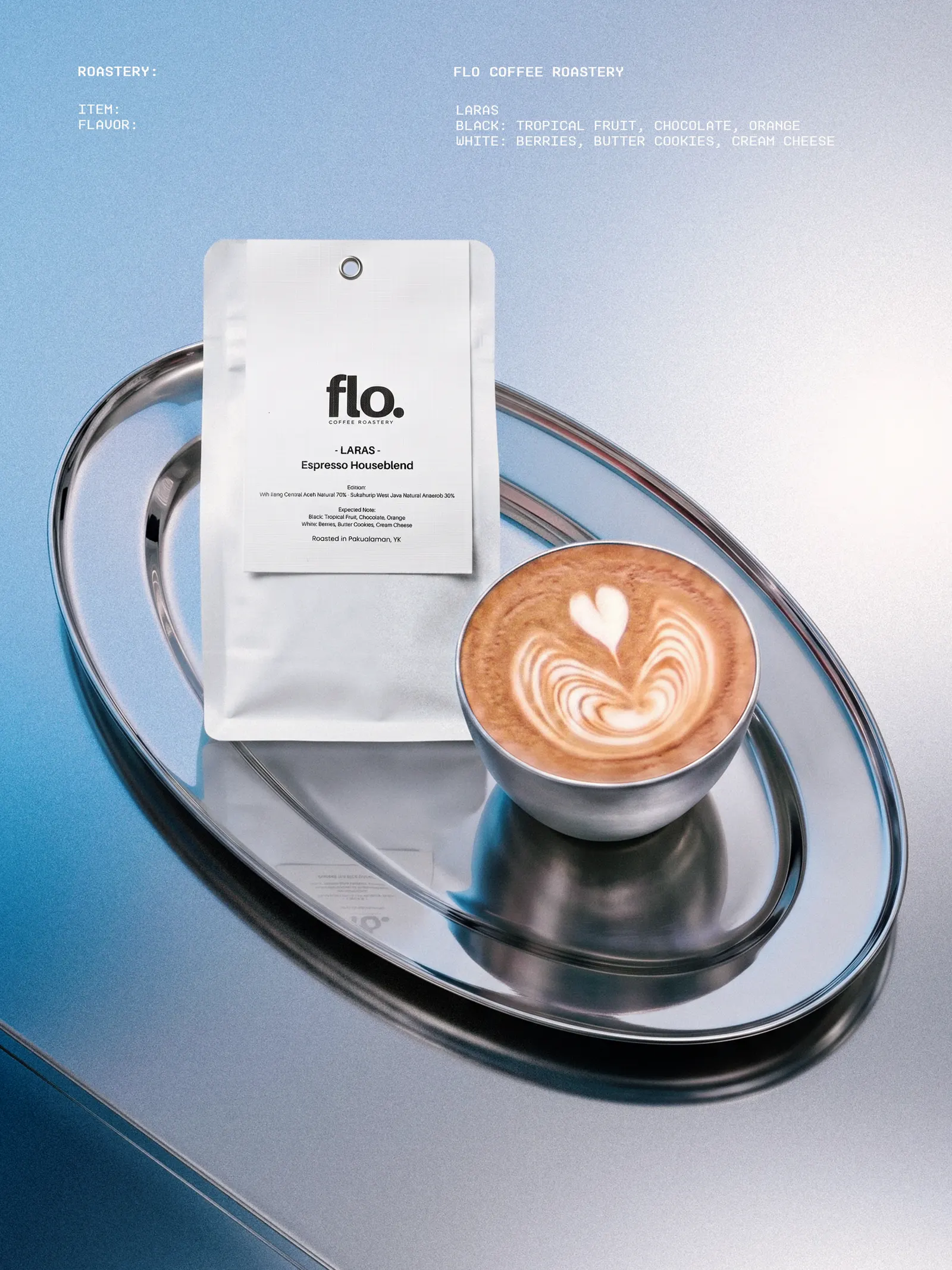
Laras is the blend we keep on the machine. It was built for milk, and it doesn't need it. Here is the same coffee, twice:
- Black: tropical fruit, chocolate, orange.
- With milk: berries, butter cookies, cream cheese.
Restaurants and cafés build menus around it because it holds its shape in a flat white and still reads clean as a straight shot. The same cup, morning after morning.
Small batch. Logged. Cupped.
We roast on a data-logging machine in Pakualaman, one small batch at a time. Charge, drying, first crack, drop: every curve is recorded, so a roast that worked can be repeated tomorrow and next month. Traditional craft, measured properly.
Small batches are not a romance. They mean even heat across the drum, and they mean we can stop a roast at the second we intended to.
Green
Specialty grade only. We vet the supply chain behind each lot to confirm no forest land was cleared for the coffee we buy.
Roast
Each lot is profiled more than once before it earns a product page. We are looking for the sweet spot that expresses the origin, not the safe middle.
Cup
Every batch is cupped before it leaves the roastery. For partners, the cup has to taste the same in March as it did in January.
Aceh to Sulawesi, under canopy.
Our shelves currently run from Gayo in Aceh and the highlands of West Java to Central Java, the Argopuro slopes in East Java, Bali's Kintamani and the Toraja highlands of Sulawesi, grown between 1,200 and 1,800 metres, in the shade of natural forest canopy.
Shade-grown coffee is better coffee. The forest that shades it stays a forest.
Under canopy, the cherry ripens slowly. Slow ripening builds sugar, and sugar is where the flavour lives: citrus, stone fruit, cocoa, jasmine. It also builds the watersheds and the soil that the next harvest depends on. That relationship is the product.
What the coffee is worth.
Roasted beans are not a commodity rate. Two things move our price: the origin (terroir, and the logistics of getting a harvest down a mountain) and post-harvest processing, which is where most of the flavour is decided.
- Wholesale price
- IDR 380,000 / kg
- Minimum order
- 5 kg, premium specialty arabica
- Volume price
- IDR 350,000 / kg on orders of 25 kg or more
- Price basis
- Origin (terroir and logistics) and post-harvest processing
We pay premium prices to the processors who keep shade-grown coffee standing, which is how a wholesale order becomes something you can put in a sustainability report.
Zero deforestation
No forest land was cleared for the coffee we buy, and we check before we commit to a lot.
Premium prices
Processors who maintain shade-grown environments are paid above commodity rates for doing so.
Cupped before it ships
Sensory evaluation on every batch, so a partner's house cup does not drift between orders.
For hotels, restaurants, cafés and offices.
We work with two kinds of buyer: places that serve coffee to guests, and workplaces that serve it to the people who work there. Both get the same beans, the same roast date, and a supplier they can explain.
Hotels, restaurants & cafés
- Custom roast profiles, including a signature house blend that is exclusive to your venue.
- Roasted and dispatched from Yogyakarta, so the gap between roast and service stays short.
- Wholesale from 5 kg, with a story your staff can actually tell at the table.
Offices & corporate spaces
- Specialty grade in place of commodity coffee. The difference shows up before 9 a.m.
- A deforestation-free supply line to enter against your ESG targets.
- Brewing training for whoever ends up making the coffee.
What we do besides roast.
Wholesale beans
Roasted to order, from 5 kg, shipped on your schedule.
Custom blending
A house blend built for your menu, your espresso machine and your milk.
Brewing training
For baristas and for home set-ups: dialling in, grind, water, consistency.
Roasting training
On the machine in Pakualaman, with the logs and the curves open in front of you.
Coffee consultation
Menu, extraction and equipment, for a café opening or a kitchen starting over.
Corporate events
Cupping sessions and pop-ups for teams, guests and launches.
Roasted in Pakualaman. Brewed anywhere.
What started as a small craft in the historic heart of Yogyakarta now travels: our beans are brewed and shared well past Indonesia. Same bag. Same roast. Same forest still standing.